
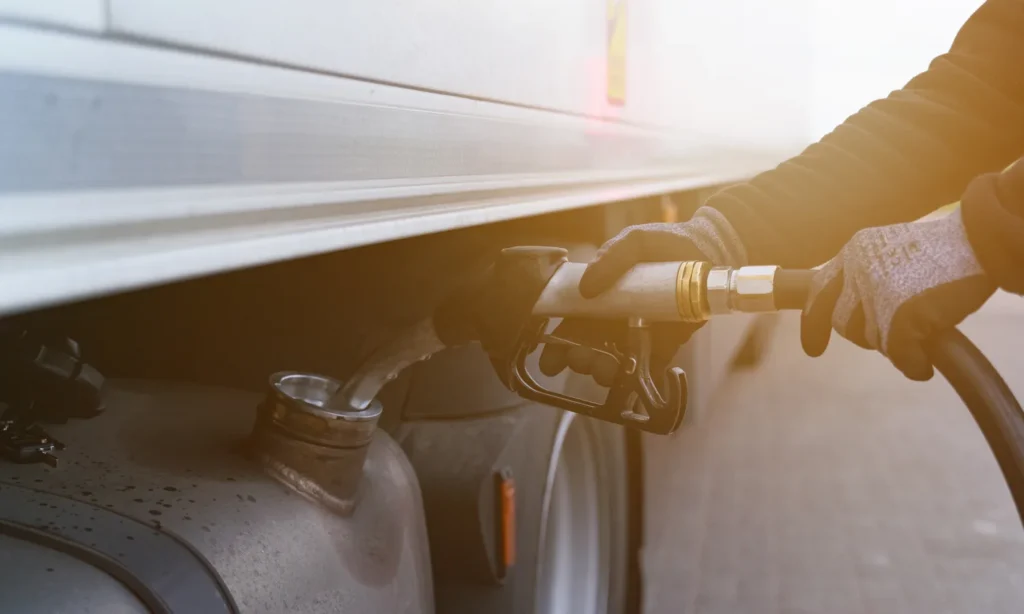
On 2 August, the last of the federal fuel excise discount disappeared from the bowser. Months later, prices are still sitting well above where they were at the start of the year.
In the week to 28 October, diesel averaged $2.77 a litre across the five largest capitals. Petrol averaged $2.34. Brent crude was trading around US$130 a barrel, up 78% on its pre-conflict level.
Most businesses got through the worst of 2026 with help. The excise was halved, the ATO offered softer payment plans and customers accepted fuel surcharges. That help has now been wound back, while the cost base it was propping up has stayed put.
At Olvera, we see this moment often in our turnaround work. Support ends before the business model has caught up. The directors who act in the next few months will have far more options than those who wait for prices to fall.
A year of shocks, and a quiet withdrawal of support
The shock arrived quickly. Once the Strait of Hormuz was effectively closed in late February, petrol jumped around 50 cents a litre within weeks. The national unleaded average reached $2.53 by late March, and diesel hit a weekly record of about $3.19 a litre in mid-April.
The Federal Government stepped in on 1 April, cutting fuel excise from 52.6 cents to 20.6 cents a litre for three months. Unleaded fell to $1.92 by late April. The ATO launched its Fuel Response Payment Plan, offering 36-month terms, no upfront payment and interest remission. The Fair Work Commission also made an emergency order from 21 April, requiring road transport rates to recover fuel cost increases measured against 6 March prices.
Then, one by one, the supports were withdrawn. The ATO plan closed to new applications on 30 June. The excise discount was halved on 1 July and ended on 2 August. Household energy bill rebates have not been renewed. The Government was always clear these measures were temporary.
Oil markets had other plans. Petrol averaged 181 cents a litre in the week ending 1 March. Today it sits at $2.34, about 29% higher, and there is no discount left to cushion it.
Running out is a real risk too
Australia imports most of its refined fuel and holds well below the International Energy Agency's 90-day benchmark. In mid-March we had roughly 36 days of petrol, 32 days of diesel and 29 days of jet fuel. Around half our diesel imports are refined from crude that travels through Hormuz. In early April, about 300 service stations ran out of diesel, many of them in regional areas.
Stocks have since recovered, and the national fuel security setting has stayed at level two, which means no rationing. The May Budget put more than $10 billion into fuel security, including minimum stockholdings of 50 days for diesel and jet fuel and a government-owned reserve of around one billion litres.
These steps will help, but they take years to build. The Energy Minister has said himself that supply chains would stay strained for months even if the strait reopened tomorrow.
For operators, that means planning for two risks at once: the price of fuel, and whether it turns up on time. Picture a civil contractor with excavators on site and no diesel delivery. On top of the higher price per litre, the bill now includes idle crews, missed milestones and liquidated damages.
Fuel tax credits are next in the firing line
The fuel tax credits scheme refunds excise to businesses that use fuel off public roads. It will cost the budget about $10.8 billion this financial year, and pressure to wind it back has never been higher.
Fortescue is campaigning for a $50 million annual cap per company, which would catch around 18 of the largest miners. In July, Labor amended its national platform to give the Government more room to cut credits for big miners. The Parliamentary Budget Office has modelled the revenue at stake. Most reform proposals protect farmers, fishers, truckies and small miners.
For now, the Government says the scheme stays, and the Resources Minister ruled out changes in the 2026 Budget. Mid-tier operators shouldn't take too much comfort from that. A cap set high today can be lowered later, and a cut to the per-litre rate would hit every claimant.
If you run a mining services business, a quarry, a regional transport company or an agribusiness, now is the time to model what a partial wind-back would do to your margins and your banking covenants. Check your contracts too, so you know who carries that risk.
The warning signs we're seeing
Company insolvencies reached 14,152 in 2025–26. Sectors that rely heavily on fuel or freight, including manufacturing, retail and wholesale trade, are reporting the weakest conditions. Economist Saul Eslake's April report for the Civil Contractors Federation found civil construction relies on diesel more heavily than transport or agriculture, and many of its fixed-price contracts have no rise-and-fall clause.
Across our client work, the same early warning signs are present:
- Customers pushing back on fuel surcharges, or surcharges lagging real costs by a billing cycle
- Fixed-price contracts quoted before March with no escalation clause
- ATO debt building again, or fuel payment plan instalments being missed
- Directors funding wages or fuel from their own pockets
- Superannuation and PAYG withholding falling behind
- Suppliers shortening terms or asking for cash on delivery
The pattern is familiar. A transport operator signs a 12-month fixed-rate contract in January. By April, the fuel bill is up by a third. The owner covers the gap from the overdraft, then from the BAS, then from their own savings. By the time the ATO letter arrives, two of the best options are already off the table.
These signs usually show up in the management accounts three to six months before a business hits serious trouble. That window is when a turnaround is most achievable.
Four moves for businesses right now
- Check every contract for fuel exposure. Identify fixed-price work, escalation clauses and where you sit in the road transport contractual chain. Renegotiate before you quote the next job.
- Price for the new normal. Link surcharges to a published benchmark, review them monthly and explain them to customers. If you choose to absorb costs to protect volume, make it a deliberate decision with a clear end date.
- Plan for supply interruptions. Lock in supply agreements, look at safe on-site storage, and understand where your operations would rank if fuel were formally managed.
- Model the fuel tax credit scenario. If credits make up a material share of your profit, work out what a 25% and a 50% reduction would mean, and test your banking covenants against both.
Change is the one true constant in business, and 2026 has proven it. The emergency phase of the fuel crisis has passed, yet the higher cost base remains. Any plan that counted on the excise cut lasting until prices eased needs another look.
The businesses that come out of this stronger will be the ones that re-priced early, fixed their contracts, kept the ATO onside and asked for help while they still had choices.