
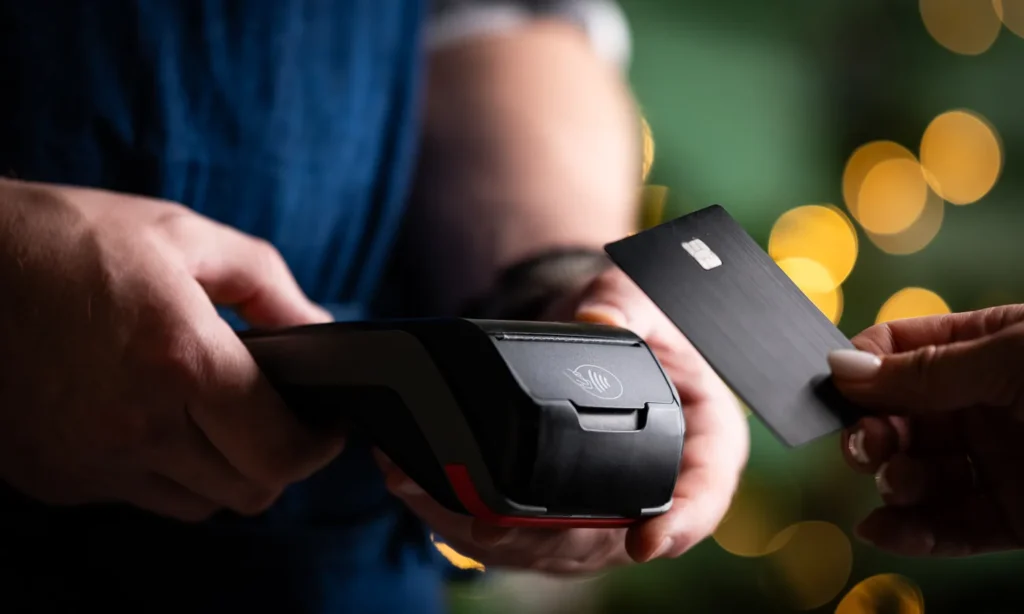
Every November, Australians pour billions of dollars into small rectangles of plastic and digital codes. Gift cards are the easiest present in the world: no sizing, no guessing, no awkward returns.
But here is the part almost no one at the checkout tells you. A gift card is not money. It is an unsecured loan you have just made to a retailer. And if that retailer fails, you are standing at the back of a very long queue, behind the banks, behind the tax office, behind the employees, and often walking away with nothing.
As restructuring and insolvency advisors, we see the other side of the gift card story. This Christmas, with several household retail names under visible financial pressure, it is a story worth telling.
A market worth billions that is growing fast
The Australian gift card market has quietly become one of the largest prepaid products in the economy. Estimates vary depending on what is counted, but recent industry research puts the market at roughly US$9 billion in 2026, growing at close to 10% a year and forecast to approach US$13 billion by 2030. Broader measures that include corporate incentive cards put the figure well above US$14 billion. Of that about 68-75% or closed loop store cards issued by retailers.
For context, a Commonwealth review in 2012 estimated the entire market at between $1.5 and $2.5 billion a year. The market has multiplied several times over in little more than a decade, driven by digital e-gift cards, corporate rewards programs and multi-brand cards sold in every supermarket.
And a large share of that value is sitting idle. Research from comparison site Finder published in mid-2026 estimates that around $1.4 billion of gift card value is sitting unused in Australian wallets, drawers and email inboxes, an average of roughly $243 per person holding an unspent card.
That unused balance is exactly what is exposed when a retailer collapses.
Why retailers love gift cards (and why that matters)
From a retailer's perspective, a gift card is one of the most attractive products on the shelf:
- Cash up front. The retailer receives the full value on day one, but delivers no goods until the card is redeemed - sometimes years later.
- Interest-free funding. Outstanding balances act as a short-term, zero-cost source of working capital.
- Breakage. A portion of cards are never fully redeemed. Industry analysts have historically placed Australian breakage at around 6–7%, with wide variation by sector. When a card expires or is forgotten, the liability is released to revenue.
On the balance sheet, unredeemed gift cards sit as a liability. In a healthy business, that is unremarkable. In a distressed business, it becomes something more concerning: a pool of customer cash that has already been spent on rent, wages and debt, with goods still owed in return.
When a retailer is under cash flow pressure, a strong Christmas gift card season can look like a lifeline. For the people buying those cards, it can be the opposite.
What actually happens to your gift card when a retailer goes under
Under Australian insolvency law, a gift card holder is generally an unsecured creditor. There is no special priority, no trust fund and no government guarantee.
In practical terms, when an administrator, receiver or liquidator is appointed:
- Secured creditors (typically lenders with security over the business) are paid first from the assets they hold security over.
- Priority creditors, chiefly employees' entitlements, come next.
- Unsecured creditors - suppliers, landlords and gift card holders - share whatever is left, which is frequently little or nothing.
Appointed insolvency practitioners are not legally required to honour gift cards. Doing so would give one group of unsecured creditors preferential treatment over others. When cards are honoured, it is a commercial decision, usually to preserve goodwill and keep customers coming through the doors while the business is sold or wound down.
That is why consumers often see conditional offers, such as requiring the customer to spend an equal amount of their own money to use the card.
The track record - from Dick Smith to Mosaic
The history of Australian retail collapses shows just how exposed gift card holders are.
Dick Smith (2016). When the electronics chain collapsed, around 45,000 gift cards worth approximately $2.5 million were in circulation across Australia and New Zealand. Cardholders were told there was little prospect of a refund. The public outcry triggered calls for legislative reform, calls that were never acted on.
Toys "R" Us (2018). Administrators agreed to honour gift cards only if customers spent an equivalent amount in store, with a hard deadline. Many customers described the condition as unfair; legally, it was more than they were entitled to.
Mosaic Brands (2024). The owner of Millers, Rivers, Katies, Noni B and others entered administration in October 2024 with around 700 stores. The receivers stated that gift card holders were creditors not entitled to redeem their cards, but offered a dollar-for-dollar arrangement: to use a $100 card, customers needed to buy $200 of product. Creditor reports later indicated unsecured creditors - a pool that expressly excluded residual gift card claims from its headline figures - faced a low or nil return.
2026 so far. This year has delivered a steady stream of retail failures, including Barbeques Galore, Aussie Disposals, Stateside Sports and Betts. Each one leaves behind customers holding cards, credit notes and deposits whose value depends entirely on decisions made by the appointed practitioners or a new owner.
The case in front of us: David Jones
It is a live example of the risk facing every gift card holder, and it has arrived just as the Christmas gift card season begins.
What the last reported accounts told us. David Jones’ FY25 accounts, lodged with ASIC around six months late, reportedly showed sales of about $2 billion and a pre-tax loss of $95.45 million, up from $74.12 million the year before. Rent costs were reported at $125 million and finance costs at $153 million. The FY26 accounts were not lodged by the 30 October deadline. Within a week, talks with landlords had broken down and administrators were appointed.
What they didn’t tell us. Public coverage of those accounts did not disclose the value of outstanding gift cards, and in the days before the appointment the company declined to say how much unspent credit its customers held.
An illustrative estimate. If outstanding gift card balances were equal to just 2–3% of annual sales (an assumption for illustration only, not a reported figure), that would mean $40–60 million of customer value. It would be spread across thousands of shoppers, corporate gift programs and rewards recipients.
What happens to that value now? Gift card holders are generally unsecured creditors. They rank behind the secured lender and behind employee entitlements. The receivers, who now control trading, and the administrators broadly have three paths:
- Honour cards in full. This is most likely while the business keeps trading and a buyer is sought, because a brand like David Jones relies heavily on customer goodwill. Consumer loss: minimal.
- Honour cards on conditions, such as matching every gift card dollar with a cash dollar, as seen at Mosaic Brands and Toys “R” Us. Consumer loss: the card’s value is effectively halved, and many cards go unused.
- Stop honouring cards if the business is wound down, or sold without taking on its gift card liabilities. Consumer loss: most or all of the outstanding balance, with any recovery limited to a small dividend, often years later.
At the time of writing, no position on gift cards had been announced. Cardholders should watch for official customer updates from the receivers and administrators rather than relying on social media or second-hand reports.
On the illustrative numbers, the gap between the best and worst outcome for consumers runs to tens of millions of dollars. That gap will be decided by the receivers, the administrators, the lender and any incoming owner, not by consumers.
That is the real lesson. Consumers have no visibility over the financial health of a retailer they are effectively lending to, and no protection if that retailer fails.
Australia is falling behind on protection
Australia did reform gift cards in 2019, introducing a minimum three-year expiry period nationally. That was a welcome step, but it addressed expiry, not insolvency. Ironically, longer expiry periods mean balances stay outstanding for longer, increasing the exposure if a retailer fails.
Other options have been debated and shelved:
- A 2012 Commonwealth review considered requiring retailers to hold gift card funds in trust, but concluded it may not be the most appropriate mechanism, citing cost and complexity.
- Following Dick Smith, a federal senator proposed legislation to hold gift card money in a separate account protected from insolvency. It did not become law.
Across the Tasman, New Zealand has gone further in principle. In 2019 its government approved a reform requiring businesses that continue to trade after entering receivership or liquidation to honour at least 50% of gift card value. Progress into legislation has been slow, but it signals a recognition that gift card holders are a distinct, vulnerable class of creditor, everyday consumers who never chose to extend credit and cannot assess the risk.
Our view, a quiet transfer of risk to consumers
At Olvera Advisors, we work with businesses across the full spectrum of financial distress, from early turnaround to formal appointments. Our perspective on gift cards is simple:
Gift cards shift insolvency risk onto the people least equipped to bear it. A supplier can check credit references, demand security or shorten payment terms. A grandparent buying a $50 card for a grandchild cannot. That creates responsibilities on three fronts.
For directors and boards. Unredeemed gift card balances should be monitored as a genuine liability, not treated as free working capital. Where a business is facing solvency concerns, directors should take advice early on whether continuing to sell gift cards is appropriate, and how outstanding balances will be treated in any restructuring. Early engagement, including using safe harbour protections properly,preserves options and value for every stakeholder, customers included.
For policymakers. The case for reform has been made repeatedly for more than a decade. A modest statutory floor, similar in concept to New Zealand's proposed 50% model, or a requirement for larger issuers to segregate a portion of gift card funds, would materially reduce consumer harm without unduly burdening healthy retailers.
For consumers. Until the law changes, the burden of protection falls on you.
Five things to do with your gift cards this week
- Spend it, don't save it. A gift card is worth most the day you receive it. Use it promptly, particularly if the retailer has been in the news.
- Favour multi-store or shopping centre cards. Cards redeemable across many retailers reduce your exposure to any single business failing.
- Pay by credit card when buying. If a card becomes worthless soon after purchase, you may be able to seek a chargeback through your bank.
- Keep the receipt and card details. If the retailer enters administration, you may need proof to lodge a claim as a creditor.
- Watch for official notices. ASIC publishes insolvency notices, and administrators publish customer FAQs explaining whether, and on what terms, gift cards will be honoured.
Australia's gift card market is now a multi-billion-dollar pool of consumer cash held by retailers, many of whom are operating in one of the toughest trading environments in years. When those retailers fail, gift card holders have almost no protection, and history shows they often recover nothing.
Gift cards are not going away, nor should they. But it is time for retailers, boards and regulators to recognise them for what they are: an unsecured loan from the public. Until then, our advice is straightforward, give the gift, and tell them to spend it.