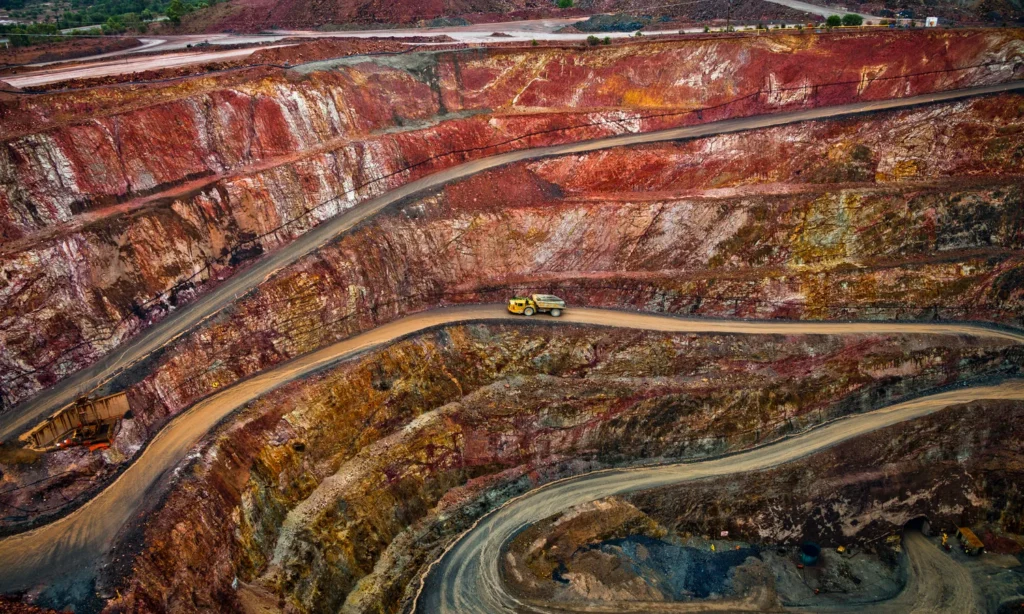
For three decades, Australia’s economic story has had a simple plot, dig it up, ship it to China, collect the cheque. Iron ore paid for our surpluses, propped up our dollar and carried us through the GFC with barely a scratch.
But the cheque is getting smaller. Last month, iron ore futures in Singapore slid to around US$89 a tonne, their lowest level since September 2024. Prices are down roughly 15% this year and have fallen in seven of the last ten months. October delivered the lowest month-end close in four years.
So here’s the uncomfortable question every business owner, investor and policymaker should be asking: is Australia still the lucky country, or has our luck simply been running on Chinese steel mills?
China Hasn’t Stopped Buying. Yet. Here’s Why That Should Worry You
Let’s be precise, because the headlines often aren’t. China has not stopped buying our iron ore. It imported a record 1.26 billion tonnes in 2025, and imports for January–September 2026 reached about 955 million tonnes, still up 4.1% on last year.
But look under the bonnet and the engine is sputtering:
- Growth is fading fast. Import growth has slowed from over 6% in the first half to 4.1% year-to-date.
- The monthly trend has turned. September imports were 5.6% lower than a year earlier.
- Steel demand is shrinking. China’s apparent steel consumption fell 7.1% in 2025 to 829 million tonnes, and crude steel output is forecast to fall a further 3.1% this year.
- The structural shift is real. More scrap recycling and electric arc furnaces mean China needs less ore per tonne of steel. Our own government now forecasts Chinese iron ore imports to fall by around 1.8% a year over the medium term.
- New competition is arriving. Rio Tinto’s Simandou mine in Guinea is ramping up and is expected to hit full production from the second half of 2028, giving Beijing more choice and more pricing power.
The volume cliff isn’t here. The slope is. And on a slope, momentum only goes one way.
Is the World Really Buying Less Iron Ore Than in 2020?
It’s a claim you’ll hear at every BBQ and boardroom, global iron ore buying has been falling since 2020. We checked the numbers. It isn’t true, at least not yet.
- China is buying more, not less. It imported a then-record 1.17 billion tonnes in 2020. In 2025 it imported 1.26 billion tonnes, roughly 8% more.
- Global trade just hit a record. Seaborne iron ore shipments reached around 1.73 billion tonnes in 2025, up 3.5% on 2024 and an all-time high, with record exports from both Australia and Brazil.
- Australia is shipping more too. Australia exported about 903 million tonnes in 2020; Western Australia alone shipped around 909 million tonnes in the 12 months to November 2025.
So what has fallen since 2020? Two things that matter far more.
- Chinese steel production peaked in 2020 at over 1 billion tonnes and is forecast to drop to around 930 million tonnes this year. China is importing more ore while making less steel, because it is replacing its own low-grade domestic ore (20–30% iron content versus 60–65% for imported ore). Chinese domestic ore output fell 7% in the first half of 2026.
- The price. China paid an average of about US$101.70 a tonne for imported ore in 2020. Today it’s around US$90 and trending lower.
That’s the real story for Australia. Our volumes are being propped up by substitution, not genuine demand growth, and that buffer has a use-by date. The government’s own forecast is for China’s imports to fall by around 1.8% a year, with India and South-East Asia picking up only part of the slack.
From $123 Billion to $79 Billion: The Export Crash in Slow Motion
The Department of Industry’s September 2026 Resources and Energy Quarterly lays it out plainly. Iron ore export earnings were $123 billion in 2025–26. They’re forecast to fall to $107 billion this financial year, $96 billion in 2027–28 and just $79 billion by 2030–31 in today’s dollars.
That’s a drop of more than a third in our single biggest export. Iron ore still accounts for over a quarter of all resource and energy export earnings, and the benchmark price is forecast to slide towards US$64 a tonne in real terms by 2031.
The irony? Australia is shipping more ore, not less. Export volumes rose 4.4% year-on-year in the June quarter. We’re running harder just to stand still.
Canberra’s Hidden Safety Net (and Why It’s Thinner Than You Think)
Here’s the good news buried in the budget papers. Treasury deliberately assumes iron ore falls to US$60 a tonne by March 2027. With prices still around US$90, every month above that line is a bonus for the budget.
The bad news, that bonus has been hiding a structural problem.
- The 2026–27 budget forecasts a $31.5 billion deficit, with no surplus anywhere in the four-year outlook.
- Gross debt is projected to pass $1 trillion.
- Treasury’s own rule of thumb: every US$10 fall in the iron ore price wipes about $3.5 billion off tax receipts over four years.
- Company tax is forecast to fall from 5.1% to 4.4% of GDP by 2029–30, as mining profits shrink.
- Government payments are heading to 26.8% of GDP, the highest since 1987 outside of COVID.
The Treasurer has already warned that the era of huge revenue windfalls is over. If iron ore drops to Treasury’s US$60 assumption, it won’t blow a hole in the budget on paper. It will simply remove the cushion that has quietly covered rising spending for years.
Why the Aussie Dollar Isn’t Saving Us This Time
Traditionally, the Australian dollar is our shock absorber. Commodity prices fall, the dollar falls, exporters stay competitive and the economy adjusts.
Not this time. The AUD is sitting around US70 cents, and has even gained roughly 10% against the euro this year, despite falling iron ore prices. Why? Because the RBA is holding it up. On 3 November, the Reserve Bank lifted the cash rate to 4.85%, its fifth hike of 2026 and the highest level since 2008, well above the US Federal Reserve.
That’s a double hit for business: a strong currency squeezing exporters and tourism, and rising borrowing costs squeezing households and SMEs. The shock absorber is jammed.
Recession? Many Australians Already Feel Like They’re In One
Technically, Australia isn’t in recession. GDP grew 0.4% in the June quarter and 2.1% over the year. But almost all of that growth is coming from population growth.
- Real GDP per person is still below where it was in mid-2022, after falling in 10 of the last 16 quarters.
- Labour productivity has gone nowhere and is about 5% below its early-2022 level.
- Headline inflation re-accelerated to 4.3% in the September quarter.
- Unemployment has risen to 4.7%, a five-year high.
Add a falling iron ore price, weaker company tax and higher interest rates, and the margin for error is wafer thin.
So… Will We Survive?
Yes, but not on autopilot.
Australia still has real strengths, gold is set to overtake LNG as our second-largest export, demand for copper, lithium and rare earths is growing with the energy transition and AI build-out, and total resource export earnings are forecast to peak at $422 billion this year. India and South-East Asia are buying more ore as China buys less.
What’s ending is the easy luck. The lucky country now has to become the smart country: lifting productivity, broadening the export base and building businesses that don’t depend on a single customer in Beijing.
5 Moves Smart Australian Businesses Are Making Right Now
- Stress-test for a US$60 world. If your revenue is tied to WA, mining services or resource-sector spending, model what happens if Treasury’s assumption comes true.
- Lock in or hedge your finance. With the cash rate at 4.85% and the RBA split 6–3, rate volatility is real. Review your debt structure now.
- Manage currency exposure. A dollar propped up by interest rates can fall quickly if the RBA pivots. Exporters and importers both need a plan.
- Diversify your customer base. The lesson of iron ore applies to every business: concentration risk is the silent killer.
- Invest in productivity, not just headcount. Growth that comes from more people rather than better systems isn’t growth. Technology, automation and process improvement are where the margin will be won.
If your business is exposed to WA, mining services or resource-sector spending and you’d like to stress-test your numbers, let’s talk.
Sources:
- Department of Industry, Science and Resources, Resources and Energy Quarterly, September 2026
- Australian Government, 2026–27 Budget, Budget Paper No. 1 (May 2026)
- Reserve Bank of Australia, Monetary Policy Decision, 3 November 2026
- ABS, Consumer Price Index, Australia, September 2026
- ABS, Australian National Accounts: National Income, Expenditure and Product, June quarter 2026
- ABS, Labour Force, Australia, September 2026
- China General Administration of Customs, iron ore import data (via SteelOrbis and Mysteel, January and October 2026)
- National Bureau of Statistics of China, iron ore output data (via GMK Center, July 2026)
- S&P Global Commodity Insights, global iron ore trade data (July 2026)
- SimFer (Rio Tinto), Simandou project updates (2026)
- Miningmx, “Iron ore hits two-year low as demand weakens” (27 October 2026)