Why Veronika Maine has to go, why the suit is dead, and why the winter collection might be the hardest problem of all.
Few Australian fashion labels have been as closely tied to working women as Cue. That history is now being tested.
On 15 September 2026, Cue entered receivership. FTI Consulting confirmed that higher sales and other improvements could not cover overhead costs. The business lost AUD 5.1 million in 2025 on revenue of AUD 103.2 million.
That is not the profile of a brand nobody wants. It is the profile of a business carrying too much structure for the customer it now has.
Whoever buys Cue should not try to restore what it was. They should cut it back to what still works. In our opinion that means five hard decisions: close Veronika Maine, redefine workwear, shrink and refresh the store fleet, manage the stock already in the pipeline, and build a proper discount model.
1. Veronika Maine was built for a war that is over
Cue launched Veronika Maine in 1998 as a sister brand, a softer and more premium alternative to Cue's sharp tailoring.
The strategy behind it came from the department store market of the time. Cue was one of the first brands to use the concession model, joining Myer in 1970. When David Jones and Myer started competing for exclusive labels, a second brand gave the Levis family a way into David Jones without upsetting Myer. For years Veronika Maine was marketed as exclusive to David Jones nationally.
That reason no longer exists. By 2024, Veronika Maine was sold through both David Jones and Myer. What remained was the cost: a second design team, a second range, a second marketing budget and a second set of stores, all aimed at an overlapping and shrinking group of professional women.
The receivers have already started unwinding it. One of the first five stores to close is the Veronika Maine flagship in Mosman, which opened only two years ago.
Closing Veronika Maine should not mean throwing away what it did well. Its architectural shapes and premium fabrics can become a premium tier inside Cue. One brand with a good-better-best range is stronger than two brands competing for the same customer.
The transition of the Veronika Maine client to Cue will take time and the transition will loose some clients.
2. The office changed. The wardrobe has to follow.
Cue's tailored suits became a staple for working women in the 1980s. The pandemic weakened that business. Working from home pushed shoppers toward comfort, and those who went back to the office dressed more casually, while cost-of-living pressure cut spending.
The answer is not to leave workwear. Cue's history in that category is its most valuable asset. The answer is to design for how women work now.
Hybrid work calls for fewer matched suits and more separates: trousers, knitwear and dresses that suit a Tuesday in the office and a Saturday lunch. Cue should compete on fabric, fit and how long a piece lasts, because it cannot win on trend speed against global fast fashion.
3. A store fleet sized for a different decade
Today the two brands have 51, including nine discount outlets.
Cue has far fewer standalone stores and those are its most expensive to run.
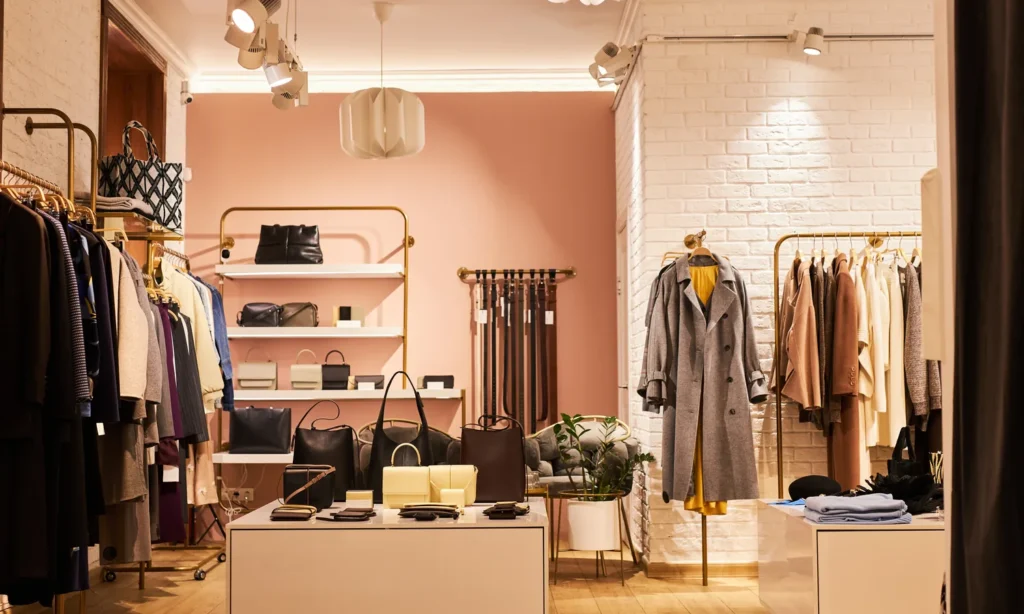
Many of those leases and fit-outs date from a time when the customer worked in the CBD five days a week and shopped at lunchtime. A store that looks tired tells customers the brand has stopped investing in them. The first closures show where the problems are, Woden, Parramatta, Armadale, Melbourne Central and Mosman.
A rebuilt Cue should rely more heavily on concessions. They cost less to run, and the department stores are already bringing in the customer. These concessions also need to be reviewed in consideration of changes in department store footprints themselves The remaining standalone stores should earn their place as brand showcases in the precincts where Cue's customer still shops. Every other lease should be tested hard.
Restructures usually fail because they cut too little, not too much.
4. The collection already in the pipeline
A new owner will not start with a clean slate. It inherits stock that has already been designed, ordered and is on its way, and some of it will not be good enough.
Recent collections have been weaker than those produced under Simon Schofield. His successor, Melanie Remai, resigned after less than 14 months, but her winter collection is still coming. The new owner will be judged on product it did not design, in a category where Cue's reputation depends on customers trusting the fit and the fabric.
The work has to be done in stages:
- Edit the range. Cut the weakest options and put the stock and marketing behind the pieces closest to what customers have always bought from Cue.
- Rework what hasn't been made yet. Where fabric has not been cut, remake it into proven Cue and Veronika Maine shapes from the archive instead of unproven new ones.
- Allocate by channel. Send the strongest pieces to the standalone stores and concessions, and move the weakest to outlets from the start instead of waiting for markdowns.
- Renegotiate open orders. Cancel or delay orders where possible. This will be difficult, because suppliers have gone unpaid, and the new owner will need those same suppliers for its first real collection. The receivership and administration gives the purchaser the options to edit new orders.
The temptation will be to clear this stock quickly through storewide discounting. That would teach customers, once again, to wait for the sale. Winter should be treated as a transition season for the new brand, manage it for cash, protect the brand where possible, and accept that the real test is the first collection the new owner designs itself.
This is not an easy task.
5. A discount problem, not a discount model
Cue has outlets, but it has no real discount strategy. In receivership, Cue is offering 25% off everything online and Veronika Maine 20%. Promotions like that, repeated across full-price stores, online and outlets, teach customers to wait for the sale.
Successful premium brands keep their off-price business clearly separate. That usually means a range made specifically for outlets, dedicated outlet locations, clear markdown rules, and a small number of planned clearance events instead of constant discounting. The aim is to protect full price in the main stores while still clearing stock profitably.
Wholesale also deserves another look. Cue and Veronika Maine had left wholesale completely by 2008. A limited return through selected independent boutiques and regional stockists would reach customers without the cost of more leases.
The opportunity for a buyer
There is real interest. Myer and Oroton Group have been named as possible buyers, and first offers are due in early October. Australian retail has seen brands recover from this position before: Marcs, David Lawrence and Oroton all came back after collapsing.
A successful rebuild will not come from reversing everything. It will come from one brand instead of two, workwear designed for hybrid working, fewer but better stores, a disciplined approach to the winter stock, and a discount model that protects full price.
Cue's own name has always meant being ready for what comes next. Its next owner needs to act on that.
What would you cut first? I'd like to hear from anyone who has worked through a fashion turnaround.
Olvera Reports
Navigating Market Volatility in Retail