HOME / Insights

HBCF in the spotlight with the Bathla

Construction and property

$3.2 billion developer failure, 2,000 homes under construction - and a Home Building Compensation Fund exposure that scheme design caps far below the headline number.

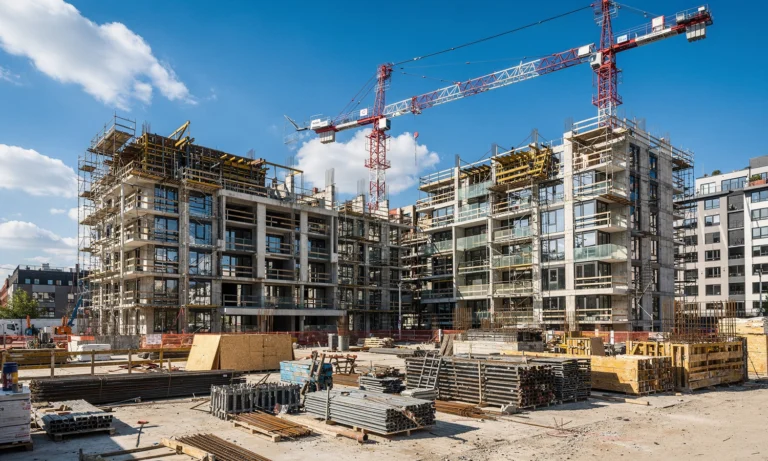
Administrators say about 2,000 homes are under construction across the group and around 13,000 more sit in the development pipeline, against a marketed pipeline of some 22,000 apartments and 3,500 houses. Bathla joins 1,522 NSW construction insolvencies in 2025-26, a list that also includes Beechwood Homes, Novati Constructions and Built Lifestyles.

Numbers of that size prompt an obvious question in NSW: what does this do to icare, which underwrites every home warranty policy in the state?

The short answer is that icare’s exposure is real, will run for years, and is nowhere near the headline debt figure but it is also not insignificant and could run to over $360m. The scheme’s design does most of the work in limiting it and the single biggest limiter is that the people most visibly hurt by this collapse are largely not insured under the scheme at all.

Why is icare exposed to a builder collapse?

The Home Building Compensation Fund is the last-resort insurance scheme established under the Home Building Act 1989 (NSW). Since private insurers exited the market, icare is effectively the sole provider, with the State Insurance Regulatory Authority as regulator and underwriting sitting with the NSW Self Insurance Corporation. icare brought claims management in-house from Gallagher Bassett during 2025.

It is not a general defects warranty. It pays only when a homeowner cannot recover from their builder because of a defined failure event.

When does HBCF home warranty cover kick in? The levels that matter

Level 1: The threshold for cover to exist at all

  • HBCF cover is compulsory for residential building work valued over $20,000.
  • It must be in place before work starts or any money is taken under the contract, including the deposit.
  • Cover is issued project by project under the builder’s Certificate of Eligibility, which caps how much insured work that entity can hold open at any one time.

Level 2: The trigger events

A policy responds only if the builder or contractor:

  • becomes insolvent;
  • dies;
  • disappears; or
  • has their licence suspended for failing to comply with a money order made by NCAT or a court in the homeowner’s favour.


Voluntary administration of the contracting entity is the relevant trigger here. Until an entity actually fails, the homeowner’s remedy is against the builder directly, through Fair Trading and NCAT.

Level 3: The monetary caps

Limit Amount Notes
Maximum cover per dwelling $340,000 Set in the Home Building Regulation 2014. A total cap across non-completion, defect rectification and ancillary costs.
Non-completion sub-limit 20% of contract price Applies within the $340,000 cap. Introduced in 2002 to limit insurer exposure to completion costs.
Ancillary costs Inside the $340,000 Alternative accommodation, removals and storage are not additional to the cap.
Compulsory insurance threshold Over $20,000 Contract price, or reasonable market cost of labour and materials where price is undetermined.
On a $700,000 build, non-completion cover stops at $140,000 regardless of how far short the work fell. The $340,000 figure has not moved in a decade; SIRA review material notes a rising share of claims reaching or exceeding it, and canvassed a lift to around $540,000 to restore its real value.

Level 4: The time limits

Claim type Insurance period
Major (structural) defects 6 years from completion
Non-major defects 2 years from completion
Non-completion / failure to commence 12 months from the date work stopped or failed to start
Notification of loss Generally within 6 months of becoming aware of the loss
This is why a Bathla claims tail runs to roughly 2032, not 2027.

Three exclusions that shrink the exposure dramatically

Buildings over three storeys sit outside the scheme

Section 56 of the Home Building Regulation 2014 exempts residential buildings of more than three storeys containing two or more dwellings. Bathla’s pipeline is apartment-weighted - roughly 22,000 apartments against 3,500 houses. On the face of it, the great majority of that apartment stock attracts no HBCF policy at all. Those buyers rely on the Design and Building Practitioners Act, developer statutory warranties, Building Commission powers and the decennial liability insurance regime, not on icare.

Developers are expressly not insured

Section 99(2)(a) of the Home Building Act says the insurance requirement does not extend to a developer on whose behalf the work is being done. Where a Bathla development entity engaged a Bathla building entity, the developer holds no claim of its own. What it holds is the right to pass the benefit of the policy and the statutory warranties to its successors in title.

Which makes unsettled off-the-plan buyers the weakest link

A purchaser who has exchanged but not settled is not yet a successor in title and, in most configurations, not a person on whose behalf the work was done. They are contractually exposed to the vendor entity, with deposit protection resting on the sale contract and trust arrangements not on an icare policy. Politically this is where the pressure will land, and it is exactly where the scheme does not reach.

Where icare genuinely is exposed

There are now two types of Bathla clients with very different profiles.

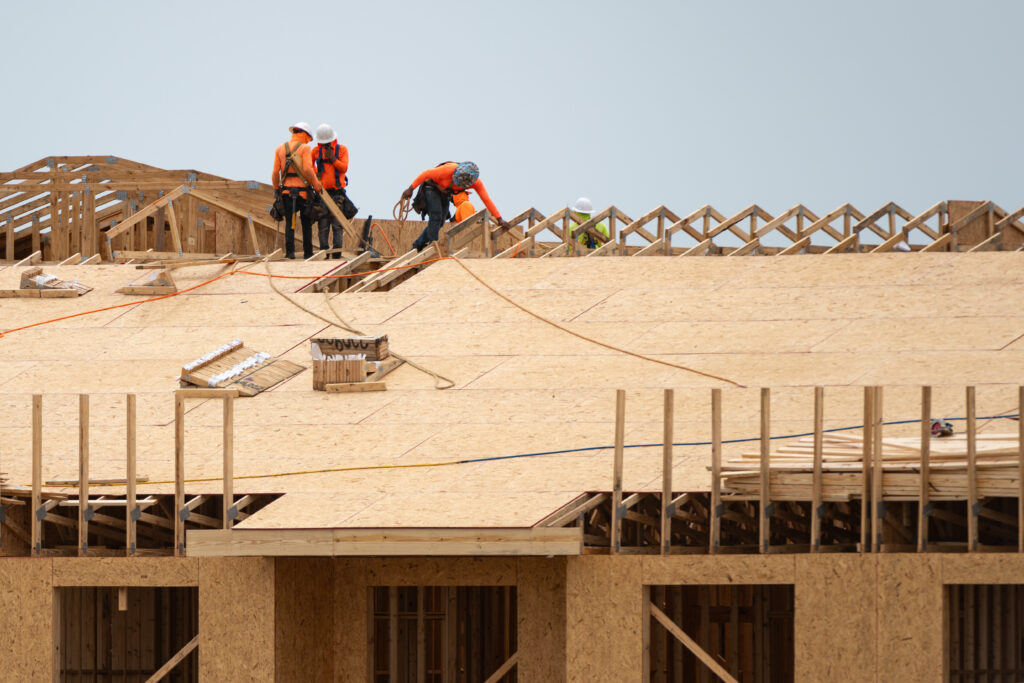
Non-completion claims on homeowner-principal contracts

House-and-land and contract builds where an individual not a Bathla entity was the contracting owner. Each has a certificate of insurance, each triggers on the builder’s insolvency, and each is capped at 20% of contract price. This crystallises fast, claims must be made within 12 months of work stopping.

Defect claims from settled purchasers still within warranty

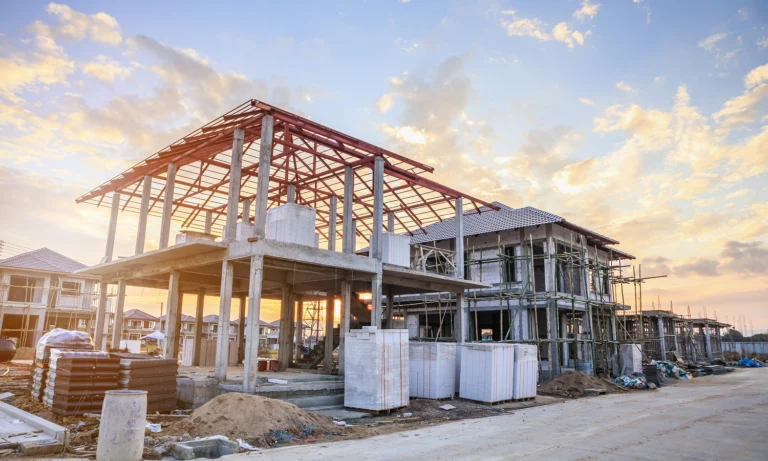
Every buyer who has taken title to a Bathla-built dwelling of three storeys or less in the last six years now has an insolvent builder standing behind their statutory warranties. Insolvency converts what would have been a rectification conversation into a claim. This population is much larger than (A) and emerges slowly.

How much is icare’s Bathla exposure? A modelled estimate

icare has published nothing on Bathla and the administrators have not released a policy-by-policy schedule. What follows is modelled from the disclosed scale of the business and the scheme’s own parameters. Treat it as a range, not a forecast.

Non-completion claims

Scenario Homeowner-principal contracts affected Average payout Estimated cost
Low 150 $80,000 ~$12m
Central 400 $110,000 ~$44m
High 900 $140,000 ~$126m
Average payouts sit well below the $340,000 cap because the 20% sub-limit binds first on most detached and attached dwellings.

Defect claims

Scenario In-warranty covered dwellings Claim frequency Average payout Estimated cost
Low 3,000 8% $70,000 ~$17m
Central 5,000 12% $100,000 ~$60m
High 8,000 20% $150,000 ~$240m

Indicative total gross incurred cost: $30m (low)·$105m (central)·$365m (high)

Nothing here counts apartment towers, unsettled off-the-plan purchasers, subcontractors or lenders. Those losses are large, but they are not icare’s.

Recoveries will be limited

icare can pursue subrogated recovery against the insolvent entities. With $3.2 billion in liabilities, heavy secured private credit lending and a first creditors’ meeting on 4 September, unsecured recoveries are likely to be immaterial.

The harder questions for icare

Eligibility and open job value

icare’s principal exposure control is the Certificate of Eligibility, which limits how much insured work a builder can hold at once. Bathla operated through hundreds of separate companies, but only one or two building licensed entities. Whether icare’s model looks through related-entity structures - and whether it should be required to - is now a live question.

Timing of the eligibility signal

Bathla’s distress was reported for months before administration. If eligibility was reviewed and maintained during that period, icare will be asked why. If it was suspended, homeowners who contracted afterwards may find no certificate exists at all.

Cover adequacy, again

The review of the $340,000 cap was already underway. A cohort of Western Sydney homeowners discovering that 20% of contract price does not finish a half-built house is the kind of case study that moves policy and any increase in the cap raises premiums for every builder in the state.

What to watch next

  • Any icare or SIRA statement identifying which Bathla licensed entities held eligibility, and the number of live certificates of insurance attached to them. That single disclosure would replace most of the estimating above with arithmetic.
  • The NSW Government’s response on unsettled off-the-plan purchasers, who currently fall between the scheme’s edges.

Frequently Asked Questions 

What is the Home Building Compensation Fund?
The HBCF is the NSW home warranty insurance scheme under the Home Building Act 1989. It is underwritten by icare and regulated by SIRA. It compensates homeowners for incomplete or defective residential building work when the builder becomes insolvent, dies, disappears, or has their licence suspended for not paying a court or tribunal order.
Cover responds once a trigger event occurs — most commonly the builder’s insolvency. Voluntary administration of the contracting entity is generally enough. Before that, the homeowner’s remedy is against the builder directly through NSW Fair Trading and NCAT. Cover only exists if the work was over $20,000 and a certificate of insurance was issued.
Up to $340,000 per dwelling. Incomplete work is sub-limited to 20% of the contract price within that cap, and ancillary costs such as alternative accommodation, removals and storage also sit inside the $340,000. The cap has not been increased in a decade and is currently under review.
Six years from completion for major structural defects, two years for other defects, and 12 months from the date work stopped or failed to start for non-completion. Loss must generally be notified within six months of becoming aware of it. These limits are strict, though NCAT can extend in limited circumstances.
Usually not. Residential buildings of more than three storeys containing two or more dwellings are exempt from HBC insurance. Buyers rely instead on developer statutory warranties, the Design and Building Practitioners Act, the decennial liability insurance regime and NSW Building Commission powers.
Generally no. Developers are excluded from cover under section 99(2)(a) of the Home Building Act, and the policy benefit passes to successors in title. Until settlement you are not a successor in title, so your protection sits in the sale contract and deposit trust arrangements, not with icare.
icare has not published a figure. Modelled from the disclosed scale of the business and the scheme’s parameters, gross incurred cost plausibly falls between $30 million and $365 million, with a central estimate near $105 million, emerging over about six years as defect claims mature.
icare can pursue subrogated recovery against the insolvent entities after paying claims. With roughly $3.2 billion in liabilities and substantial secured private credit lending ranking ahead, unsecured recoveries in the Bathla administration are likely to be immaterial.

Speak to the Olvera Expert

Picture of Damien Hodgkinson

Damien Hodgkinson

Principal
Damien develops strategic solutions for groups dealing in crisis management and/or distress investment.

Table of Contents

Your Turnaround Starts Here

With decades of experience in restructuring and advisory, Olvera Advisors helps businesses unlock new possibilities. Take the first step toward a stronger tomorrow.

Related Articles

Read our latest articles and insights on the world of business insolvency in Australia.

Insights

Administrators from Teneo were appointed to Bathla on Tuesday. Group debt has been put at around $3.6 billion, with 226 employees and close to 15,000 ...

Insights

If you build homes or apartments in Victoria, the single most important document about your business is no longer your insurance eligibility letter. It’s your ...

Insights

In February we said Japan's election would test Australian balance sheets within six to twelve months. We were right about the mechanism. We were wrong ...