
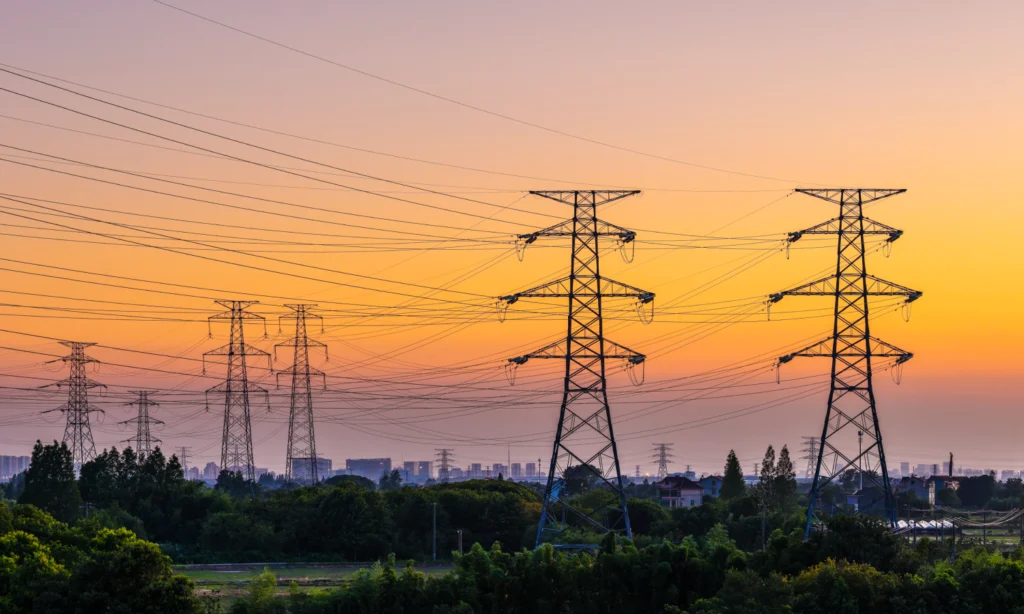
For most of the past three decades, energy was a line item Australian manufacturers managed quietly in the background. Cheap, abundant gas and coal-fired baseload power were treated as a national right. That era is over. Energy has moved from the back office to the boardroom, and for energy-intensive manufacturers it has become the one of the biggest determinants of whether production stays onshore.
Manufacturing’s share of the Australian economy has slid toward record lows, to around 5–6 per cent of GDP (depending on the measure). Despite this the sector still supports roughly 930,000 jobs and generates well over $130 billion in value-added output. Manufacturing insolvencies are not the headline driver of Australia’s current distress cycle, but they are persistent. ASIC data indicates ~636 manufacturing failures in FY25, within a record 14,722 total insolvencies, with early FY26 figures suggesting a plateau at elevated levels rather than a meaningful recovery.
Qenos, the country’s last major polymers producer, closed in 2024, leaving Australia entirely reliant on imported plastics resin; Oceania Glass, Australia’s only architectural glass manufacturer, ceased operations in March 2025 after tracing its origins back 169 years.; Incitec Pivot wound down domestic fertiliser manufacturing. Heavyweights including Orica and BlueScope have openly canvassed shifting investment to the United States.
Energy is not the only cause, but it is the common thread. When BHP’s chief executive observes that Australian electricity costs run two to three times higher than competitor nations and well above US levels, he is describing a competitiveness gap that no amount of operational excellence on the factory floor can close.
What is actually driving the cost
It helps to separate the headline from the mechanism. Australian business electricity prices sat near AUD 0.42 per kilowatt-hour in late 2025, roughly 165 per cent of the global average for commercial users, according to internationally compiled price data. But the volatility matters as much as the level. The Australian Energy Regulator’s quarterly figures show wholesale prices swinging dramatically by region and season from around $50/MWh in Victoria to $144/MWh in South Australia in a single recent quarter with severe spikes when ageing coal units trip offline unexpectedly.
The structural issue worth understanding is the role of gas. Gas-fired generation provides only a small share of total electricity, yet because it frequently sets the marginal price, it ends up determining the wholesale price a large amount of the time. That means manufacturers are exposed to global gas market shocks, Russia’s invasion of Ukraine being the most painful recent example, even when the bulk of their power comes from coal or renewables. East-coast Australia’s lack of a domestic gas reservation scheme, unlike Western Australia, remains one of the more contested policy debates. Critics argue that it leaves local industry competing against export parity prices for its own gas, while others point to supply adequacy and contractual complexity as the binding constraints.
The cost-and-reliability camp emphasises the closure of baseload coal and the expense of firming intermittent renewables. The transition camp counters with evidence from bodies such as the Climate Council and IEEFA, that renewables now produce wholesale power at roughly half the cost of fossil generation and shaved billions off bills in 2024, and that the real problem is an ageing, increasingly unreliable coal fleet. Both are true, the destination may be cheaper, but the transition is volatile.
The transition is also an opportunity - if you move first
Australia is targeting 82 per cent renewables in the grid by 2030, with major coal stations (Liddell already gone, Bayswater and Loy Yang A to follow) exiting through the early 2030s. Encouragingly, the Department of Industry’s late-2025 resources and energy outlook expects gas and LNG prices to ease over the next two years as US and Qatari supply ramps up modest relief, but relief nonetheless.
For manufacturers, the mistake is to treat all of this as someone else’s problem. The firms that will still be operating in Australia in 2035 are treating energy as a capital-allocation and competitiveness question, not a procurement one. That reframing changes what you do.
What this means for you
Lock in price certainty, not just price. Corporate power purchase agreements (PPAs) with firmed renewable generators can convert a volatile operating cost into a predictable one for 7–15 years. For an energy-intensive operation, certainty is often worth more than chasing the lowest spot price.
Generate and store behind the meter. On-site solar paired with battery storage is now a mainstream investment, not a sustainability gesture. It hedges grid exposure, captures the spread between peak and off-peak prices, and increasingly lets you participate in demand-response markets that pay you to flex load.
Attack process heat. Much industrial energy goes into heat, much of it still from gas. Electrification of low and medium-temperature process heat (heat pumps, electric boilers, thermal storage) is where the next wave of both cost and emissions advantage sits. Map your thermal load before your electrical load.
Make load flexible. The grid increasingly rewards users who can shift consumption to match abundant midday solar. Operations that can move energy-intensive runs to cheap periods turn a cost centre into an arbitrage opportunity.
Treat energy productivity as free capacity. Every megawatt-hour you don’t consume is the cheapest one you’ll ever buy. Variable-speed drives, waste-heat recovery, compressed-air leak programs and modern controls routinely deliver 10–20 per cent reductions with paybacks under three years.
Factor energy into your siting and capex decisions. This is the uncomfortable one. New capacity is increasingly going where firmed, low-cost power can be secured. If a major reinvestment is on the horizon, co-location near renewable zones, industrial precincts with shared firming, or sites with grid headroom should be on the evaluation matrix from day one.
Energy has quietly become the variable that decides which manufacturers compete and which become importers of finished goods. The instinct to wait for policy to “fix” prices is understandable but dangerous as the transition will be uneven and the political debate remains unresolved. The manufacturers pulling ahead are those who have stopped treating energy as a bill to be paid and started treating it as a strategic asset to be engineered, hedged, generated, stored, and built into every capital decision. The cost of energy can no longer be outsourced, but it can be controlled.